Wesley Mission

About Wesley

About Wesley

Wesley Mission is Australia's largest Christian complex

Wesley Mission, Sydney - The Church with three names

Introduction

WHEN we study the origins of Christianity in Australia, the first thing that stands out vividly is the lateness of the coming of the faith to this land. Australia was the last continent to hear the gospel. The first service of worship was held at Port Jackson in 1788 among the convicts and those few free men whose task it was to guard them. The early reports of the aboriginal inhabitants had not attracted traders, colonisers or even missionaries from the Northern Hemisphere. Christianity in Australia did not start with the vision of a Christian mission, but as a chaplaincy service to a penal settlement. For most, the journey was one way. They would say goodbye to old England forever--they stayed until death. This was `the fatal shore'.

Over forty years were to go by before the first Roman Catholic priests, the first Congregationalists or Baptist ministers were to come to Sydney. It was be thirty-five years before the first Methodist minister arrived. He was the Rev Samuel Leigh who arrived in 1815 following an appeal from the gathering of the first Methodists in Sydney on March 6, 1812. Three believers, a school teacher, a farmer and a convict met together for worship and decided to call a preacher from the Methodist Conference of the United Kingdom.

From that 1812 meeting, the church grew and has continued over the years until today it is Wesley Mission.

From 1812 to 1884 the church grew, flourished and then declined. From 1840 the church was centred in York Street, where congregations of over 1,000 assembled at the height of the church. By 1883 there were only 18 members and great debts. The conference was urged to close the old church.

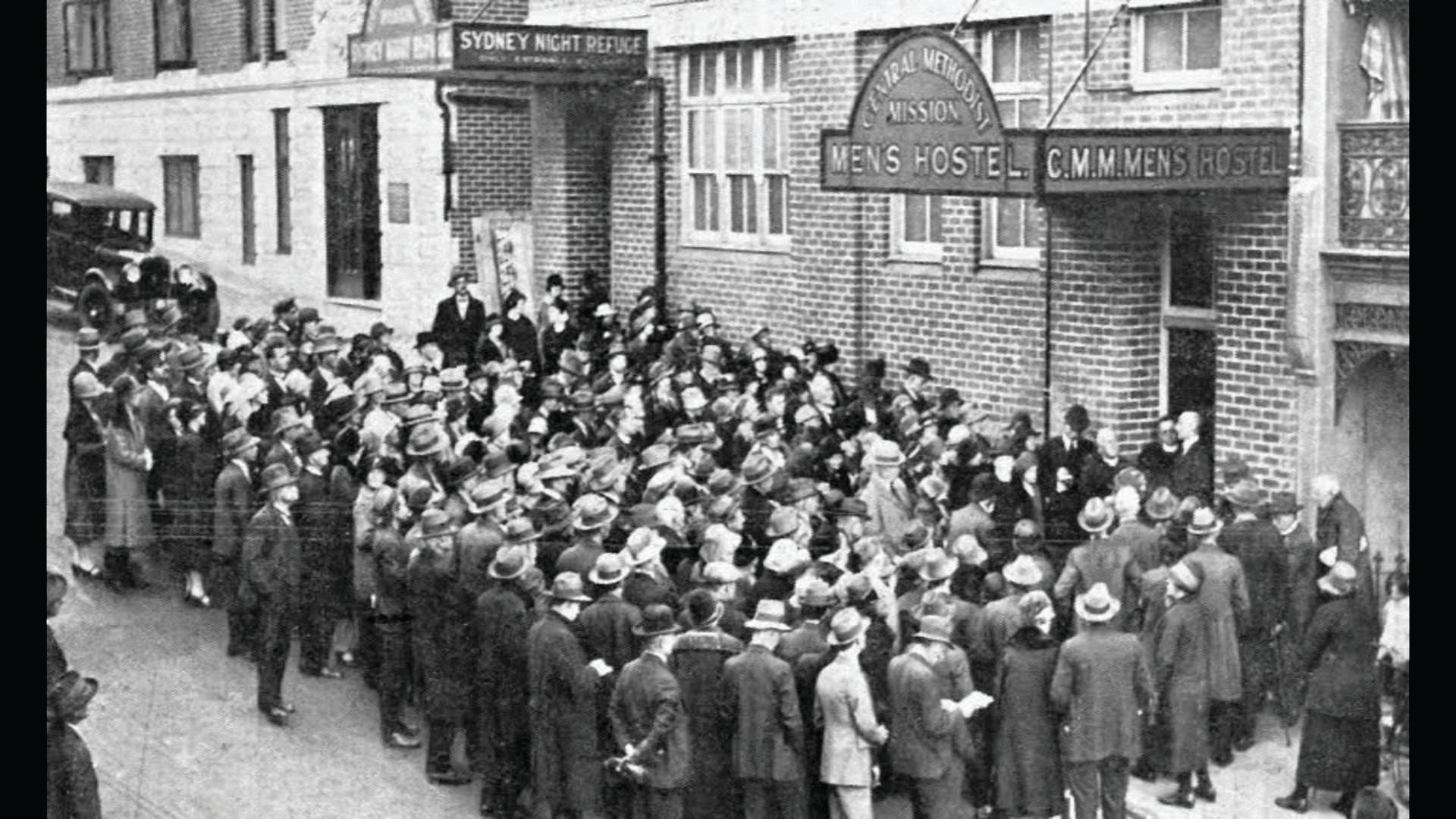
At a crucial Methodist Conference in 1884, when the decision was being taken to close the church, a last minute effort was made to save it by granting it a reprieve of one year. The Rev W G Taylor, a young evangelist, but with indifferent health, was appointed. He chose a new name, a new slogan, and a new policy for the church.

The name chosen was Central Methodist Mission.

A Living Christ for a Dying World was the slogan.

The policy was unceasing evangelism to convert men and women to Jesus Christ and a commitment to the word and deed of the gospel together to serve the needs of men.

Within a year the conference was again troubled not by how few people attended, but by how many!

Back to top

General History

IN 1885 a decision was made to build a new hall capable of seating 1,750 people. Alongside a vigorous evangelistic activity, a new work began, and within the next 20 years a seamen's mission, a work among alcoholics, a home for waifs and strays, an evangelists' training institute, a home for sisters of the poor, a home for destitute children, a medical institute for the treatment of inebriates, and a home for friendless and fallen girls, were all established.

Around the world throughout the British Empire, churches in large cities adopted this vigorous pattern of ministry to the needy centred round large preaching halls or theatres.

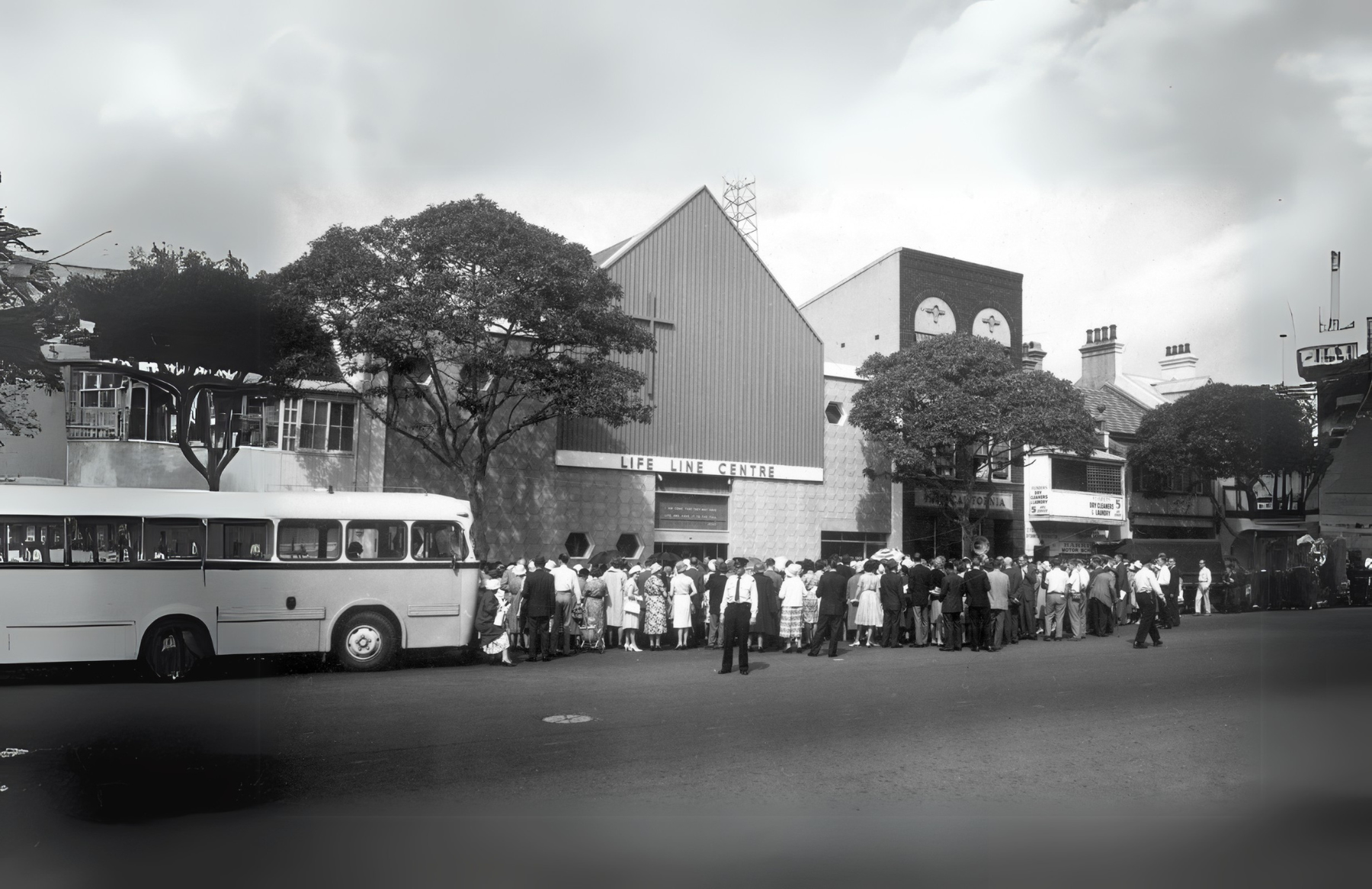
New life again came to the mission when the old Lyceum Theatre was burnt to the ground in 1964. By 1966, under the dynamic leadership of Rev Alan Walker (now Rev Dr Sir Alan Walker) a new Lyceum Theatre and Wesley Centre was opened, providing a great fellowship centre to cope with the loneliness of modern living.

In Australia's unique Church-in-a-Theatre, the gospel message has been faithfully proclaimed every week. The membership of Wesley Mission has risen while homes, hospitals and agencies express its social concern.

In 1977, the Central Methodist Mission became part of the Uniting Church in Australia, and for the third time in its history changed its name. It them became Wesley Central Mission. In the same year a new superintendent was named, and Rev Gordon Moyes, came to carry on the work that had been so magnificently accomplished by earlier superintendents.

Since his coming, the work has expanded incredibly into more than eighty suburbs of Sydney where in more than 220 centres and services, the ministry of practical care for the needy is expressed.

Wesley Centre, which for almost twenty years, had become the hub of the Mission's growing pastoral and head office activities, was now seen in a new light: a wonderful facility which still had over a million dollars of debt owing on it, but a facility that was standing in the way of progress.

From the height of the newly constructed Sydney Tower at Centrepoint in 1980, Rev Gordon Moyes looked down on the property of Wesley Mission and the newly formed Synod of the Uniting Church in New South Wales, and realised that the church's decision to refurbish the Castlereagh Street property was inadequate. What was needed was the complete removal of The Mission Settlement Building as planned, the removal of the greatly loved Wesley Chapel, the removal of the Wesley Arcade of shops and Christian enterprises, and the removal as well of the rebuilt Lyceum Theatre and Wesley Centre--the finest church complex in the Southern Hemisphere--and the total rebuilding of the whole site with expanded facilities.

This meant a huge project that would change the face of the city of Sydney. It would mean the construction of a massive complex using the air-space above the total site in such proportions that the new development would be large enough to provide the total cost of the Mission's portion of the construction. It was a grand vision. During its construction it would be the largest building enterprise in the city. The initial projection of the cost was one hundred million dollars--an astronomical sum--but before the decade was over this sum would have risen five times.

What would be accomplished on that site would not be at the expense of other developments, for Wesley Mission was to simultaneously embark on the most ambitious building program ever to be undertaken by any church in the world. Another one hundred million dollars of land acquisition, of buildings and the construction of new facilities would be undertaken in a huge expansion and renovation program.

Today the mission is proud of its history, and gives thanks to God for the successful completion of these major works, and at the height of its power looks forward to serving the needs of the community and witnessing to Jesus Christ.

Back to top

The world's most viable city Church

THE Australian church has probably made three unique contributions to the world church.

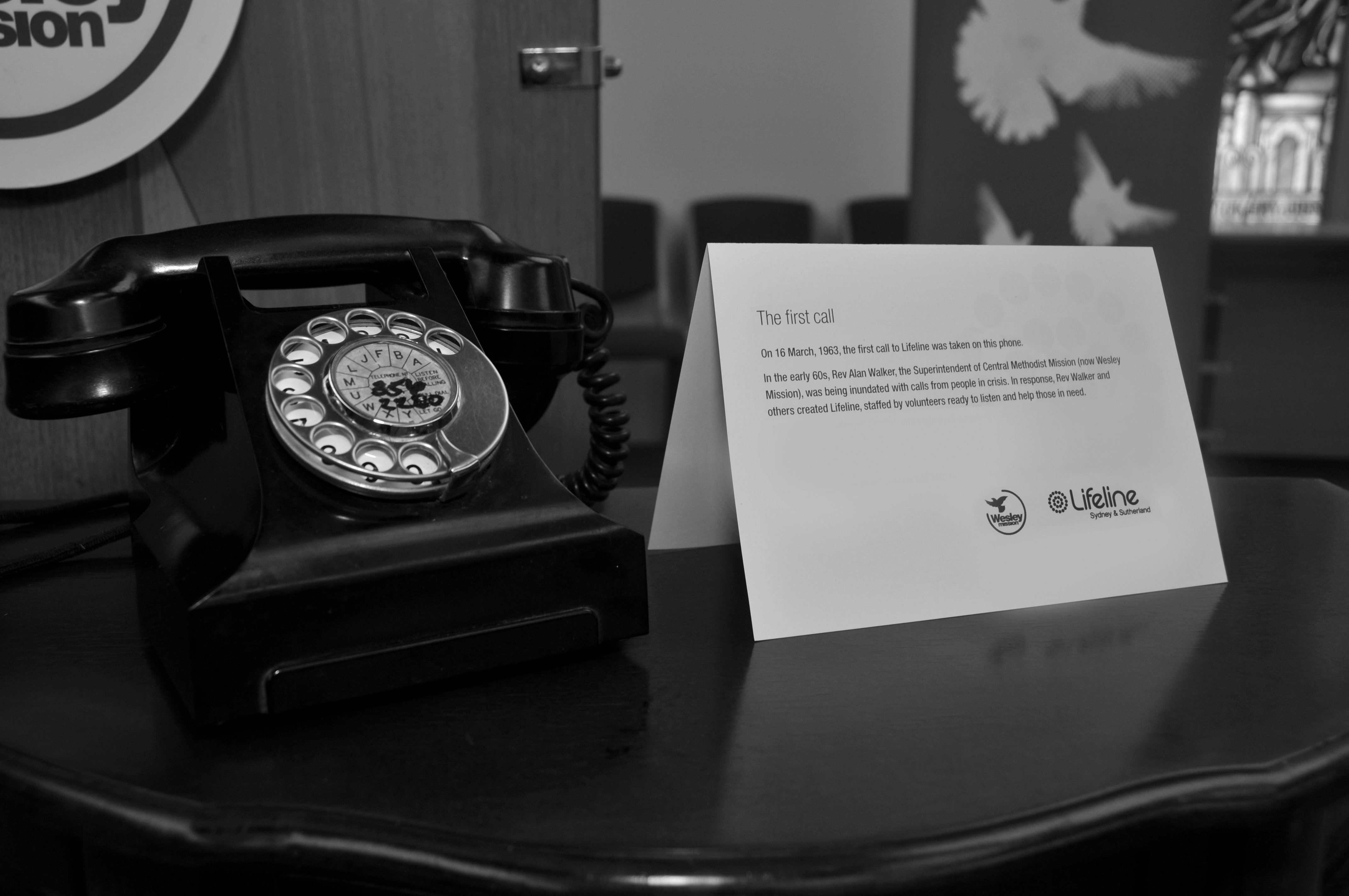
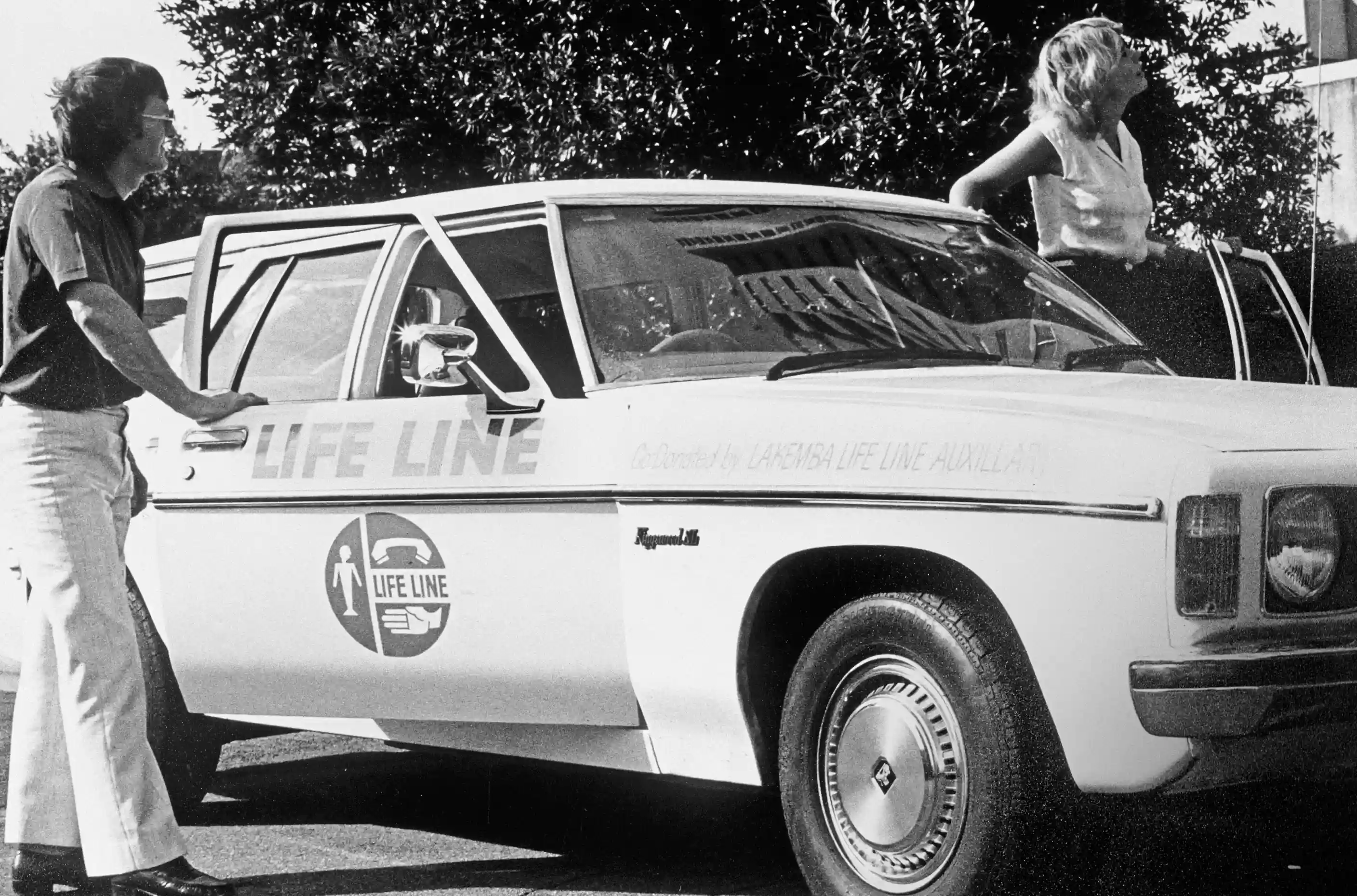
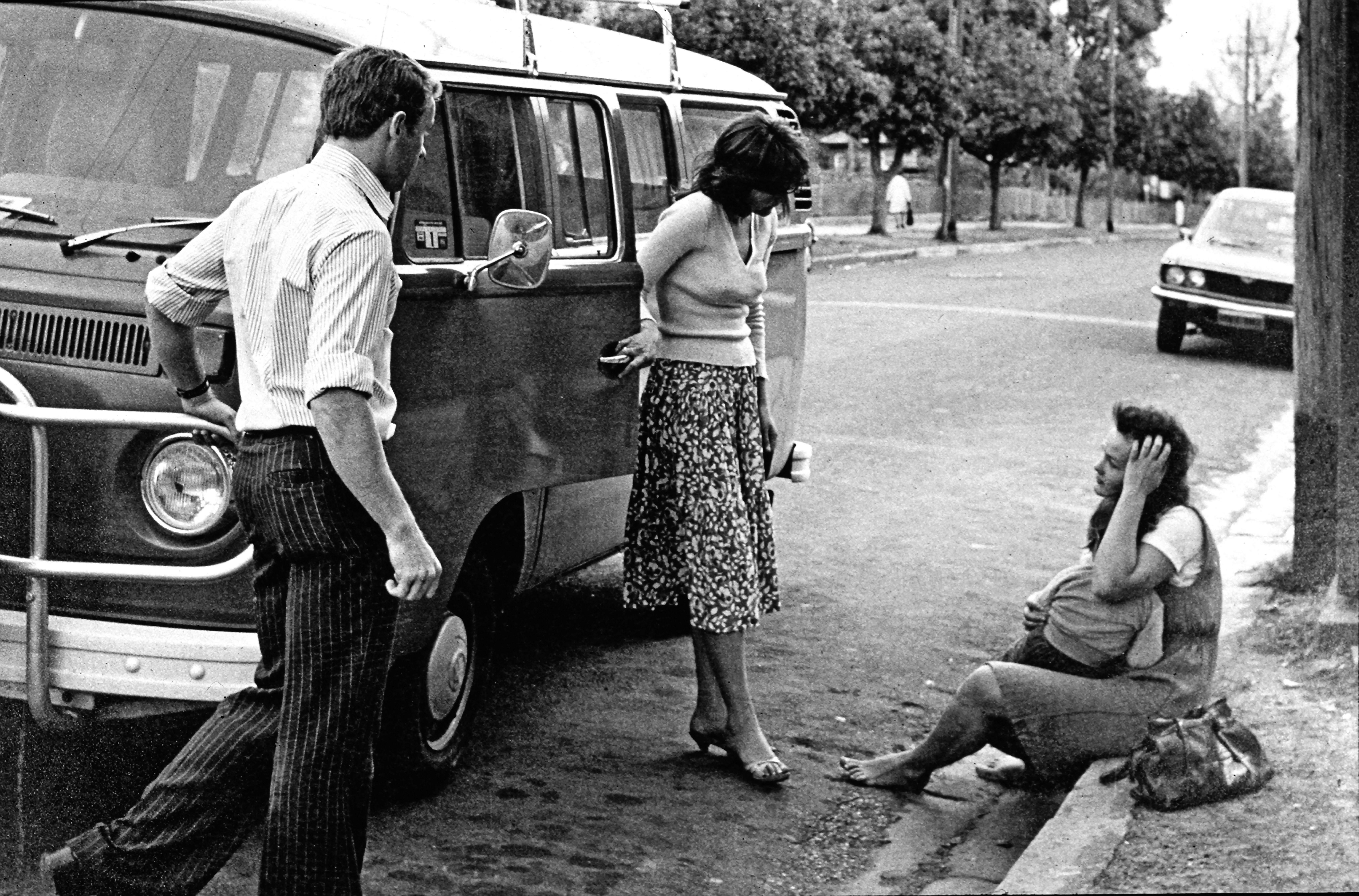
The latest of these was the establishment of Lifeline in 1963 as an extension of the church's ministry in counselling using the telephone. Today all round the world, telephone crisis centres and counselling services are available in every major city. But this development was an Australian concept.

An earlier unique contribution was made at the dawn of the twentieth century through the development of the Flying Doctor Service using radio to provide a mantle of safety over the vast inland. Today the flying doctors land in every remote part of the world, and the ubiquitous radio is to be found in the most remote part of the globe. Linking a caring medical service to a primitive radio service was uniquely Australian.

The earliest unique contribution made by the Australian church that has been repeated in all continents of the world, has been the contribution begun in 1884 of the Central Methodist Mission.

Two of these unique Australian contributions to the world church, the first and the last, had their origins in Wesley Mission, Sydney.

The central mission concept as developed first in Sydney, is today probably the most viable form of city ministry in the world. Over almost a century the Sydney Mission has grown from strength to strength, and today has the most extensive ministry of any city church in the world.

Back to top

What is the Mission concept?

The Uniting Church in Australia has wisely made provision in its regulation for parish missions. These exists in many areas of special need and at the heart of every capital city is a Central Mission.

Under Uniting Church in Australia regulations a Synod, found in most States and Territories, may designate a parish as a parish mission if that parish is responsible for approved ministries of such special character and extent that the parish should be allowed to do one or more of the following:

  • To look beyond its own membership and bounds for additional persons to assist in the general oversight and management of the responsibilities of the parish;
  • To seek additional financial support by appeal beyond the bounds of the parish, provided that such appeals shall not be addressed to parishes without prior consent of the appropriate body appointed or designated by the synod;
  • To make a case for the extension of ministerial settlements beyond the normal maximum term when the proper exercise of the special ministries so required.

That simple structure allows for the unique contribution to the church of the Central Missions and Parish Missions. The policy that unites their special form of ministry is as follows:

Back to top

Five policy points

  • 1. The Mission lives by evangelism. It seeks to reach the people of the city area who are beyond the fringe of the church. It seeks those people who have no relationship with any other church. From the very beginning until now the strength of Wesley Mission Sydney has been maintained by the flowing into its life of new people who have been transformed by Jesus Christ. The evangelical service in the Lyceum Theatre each Sunday night is the heart of its outreach, but many special forms of evangelistic outreach and congregation growth are to be found.

  • 2. The worship of God and the service of human need belong together. The Church which only worships, dies. Wesley Mission has built up a strong program of service wherever there is need. Wesley Mission is Australia's greatest cluster of charitable and serving agencies. Today through more than 150 homes, hospitals, hostels and agencies, the Mission ministers to the needs of Australia's largest city, to the nation and overseas through a variety of special ministries.

    The difference between the Mission's responsibility in social welfare and those fine homes and hospitals run by centralised denominational Boards of Management, is that the entire program of the Central Mission is initiated and governed by a local worshipping congregation. The same congregation that worships, seeks people through the gospel, also serves in every area of need.

  • 3. There is an endless need for friendship and caring in any large city. Loneliness is an urban disease. Wesley Mission with more than 250 home groups, educational classes and 70 fellowship activities provides night and day a program for thousands of people in the heart of the city. That ministry of friendship provides the Church's fellowship for those who have no other parish fellowship.

  • 4. The Church that ministers in providing welfare to the social needs of a community, must also be involved in social justice. It is not enough to care for the hurt victims of society's ills, there must be a front-on attack against social diseases that dehumanise and impoverish. Wesley Mission has a century-long tradition of prophetic preaching and social action.

  • 5. Just as St. Paul used the great highways to take the gospel into all the known world, Wesley Mission seeks to use the great highways of communication to reach into society. Through the printed word, the cassette ministry, the radio and television programs, and the international film and video ministries and its long established relationship with the general press, the Mission believes that it is making a visible contribution to the Church's ministry to the community.

Wesley Mission has a proven message and a proven method. With confidence in the future and with an enormous reservoir of goodwill existing in the community at large, Wesley Mission faces its second century of activity with optimism, and trust.

Back to top

A unique city ministry

PEOPLE who live in the heart of a great city need the elevating experience of worship. Those who have lived all of their time outside a city cannot appreciate the dehumanising influence of large city developments, crowded factory areas, impersonal streets and towering blocks of tenement buildings. When you live in an environment where concrete replaces lawn, where light poles replace trees, where factories shut off the sunset, and where the noise of traffic is the contemporary substitute for the song of the birds, it is hard to worship God.

Yet, city people need to worship. And God desires us to worship Him. When there is little beauty in the world about us except what we seek in the streets glistening after rain, or in the early light on roof tops, the church has a very special responsibility to provide a place for city people where their spirits can sing, and where their hearts are elevated in worship. Wesley Mission operates out of the environment of worship.

We were born in praise to God and today we find resources and strength for our total ministry through the worship experience of our people. In the centre of Sydney's central business district the central experience of the thousands of people touched through the life and work of Wesley Mission is the worshipping community.

It is precisely at this point where Wesley Mission is different from the other great social welfare agencies operated by denominational boards of the church, state government welfare services, or those other agencies for the community's good which, while once born in a Christian environment, have now lost their Christian witness.

Wesley Mission is unique in that worship and service belong together. We hold as many worship services as we have centres of service. We proclaim on our worship bulletins every week, `The end of worship is the beginning of service'. Service and worship are inextricably bound together, and over the century we have maintained an increasing involvement in the worship of God by the people who serve in His name.

Back to top

Wesley Church

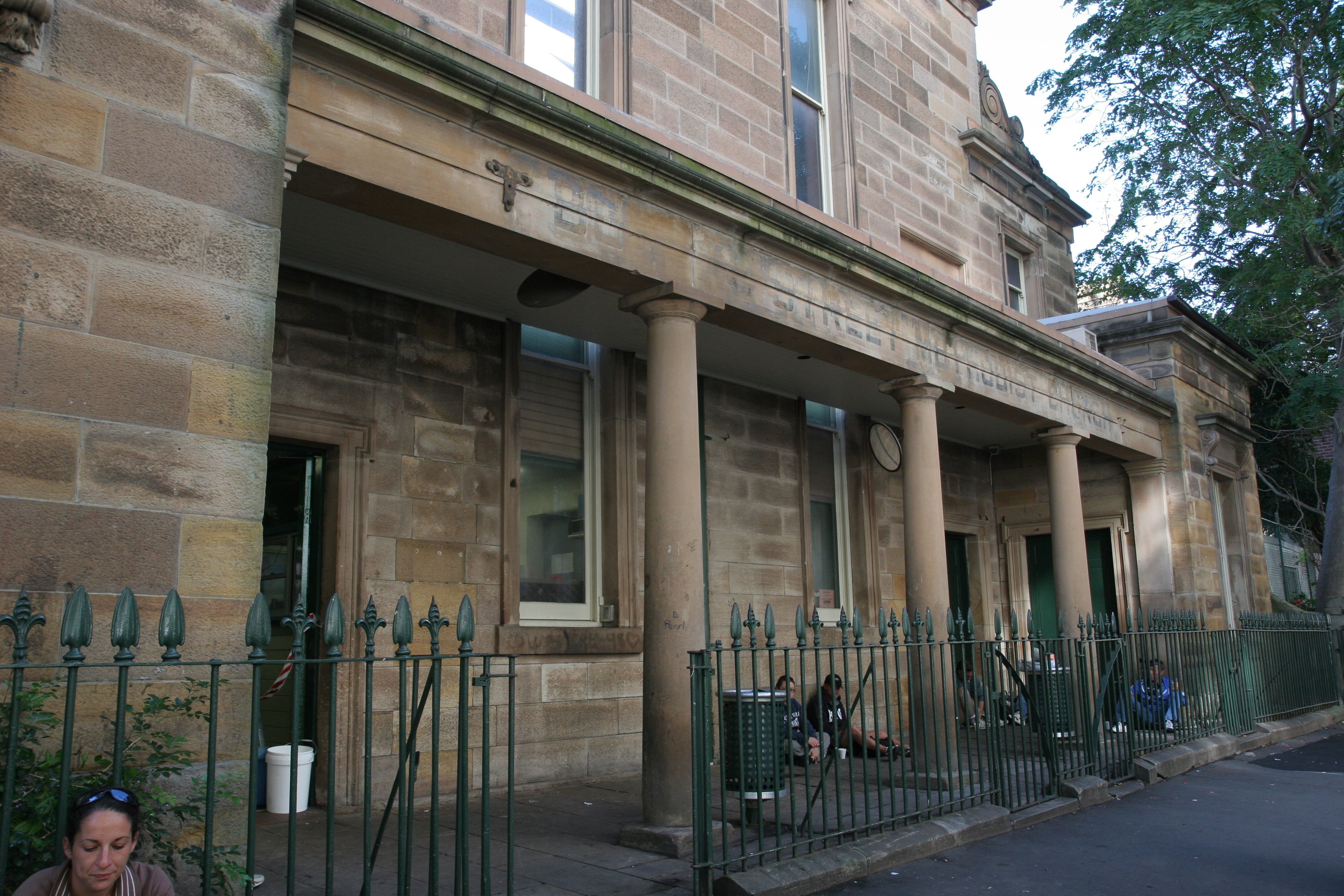
This new 500 seat Church in the heart of the city, built in 1991, is the successor to a famous small Wesley Chapel which was opened under the leadership of the then Superintendent, Rev. R.J. Williams, in 1934. For fifty years it provided a mid-city centre for worship experience, but was then demolished and rebuilt as part of a major redevelopment Wesley undertook in the heart of the city.

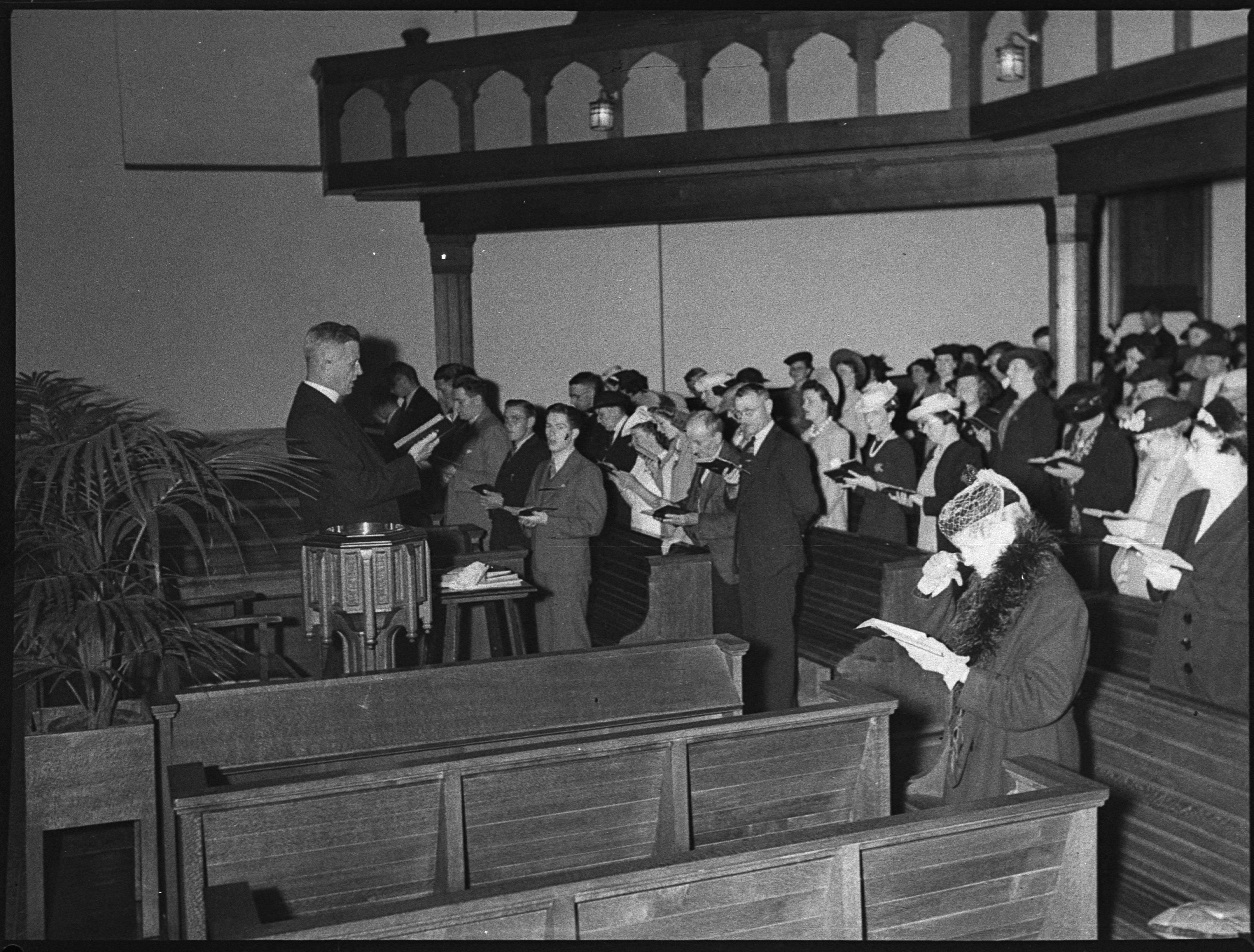
Every Sunday this chapel has been the centre of the worship of God for people who live in the inner city, for those who come and uphold this centre of worship for the benefit of others, for tourists and visitors, for folk down in the city from their normal country home, and for international visitors who find in a strange land a place where they can worship God and feel at home. For most of these fifty years Wesley Chapel has been the main worship centre of the Methodist Church in the heart of downtown Sydney.

During the rebuilding, a temporary Wesley Church was established to allow the dozen congregations to continue to meet for worship.

Wesley Church is also the scene of all our midweek services. For six days a week services are conducted for the benefit of those who work and live in the city.

Each of those daily services provides a different emphasis and attracts a different congregation. One service, Sing and Praise, celebrates the goodness of God in music and song. The Healing Service is a service of witness in word and in laying on of hands with prayer for those who are ill. Lunchtime Inspiration is a service to lift the spirit in worship and praise to God. Chapel-in-the-City is a service of preaching the positive power of God to lift a person's life. Mid-city Communion is a quiet and reflective communion service aimed at encouraging our personal devotion.

The main worship services of Wesley Mission are held in a theatre.

The Lyceum Church-in-a-Theatre came into being when the Mission obtained the Lyceum Theatre under the inspiration of two great men in the Mission's history, Rev. W.G. Taylor and the Hon. Ebenezer Vickery, M.L.C.

From that time on, the theatre became the centre of a great evening gospel service in Australia. For 90 years the theatre has proclaimed the gospel of Jesus Christ every Sunday night through wars, depressions and times of affluence.

Its congregations have been varied, hundreds of people from the widest variety of social, economic, educational, ethnic and vocational backgrounds, joined together in one purpose to worship God and to proclaim the gospel of grace.

Over the years the `Church-in-a-Theatre' has been the centre of prophetic preaching, of frequent controversy and of faithful proclamation. There have been times when the church has felt somewhat ashamed that its major place of worship should be a theatre, and at times the liturgical structure of the service was designed to make it more into a cathedral than a theatre.

However, with one of the finest theatre organs in the country, a magnificent screen and all the facilities for first-class cinema operation, the Lyceum Church-in-a-Theatre operated according to its name, it was a church worshipping in a theatre, and therefore used lighting, sound and the screen every week to effect.

During the preaching and the reading of the Scriptures the verses are shown on the screen for people to follow.

The success of this theatre as a centre of worship and evangelism was seen in the multiplying of crowded services throughout Sunday. When the decision was made to demolish the downtown properties, it was a unanimous decision of the membership to build a new theatre, a centre for the performing arts and a Convention Centre with state-of-the-art facilities which would house the church's major worship services. Wesley Theatre congregations are probably the most egalitarian church worship service in the world.

Here you will find literally professors and physicians, prostitutes and alcoholics, teachers and computer programmers, skid- row drunks and homeless teenagers, sitting side by side and hearing the proclamation of the gospel. Some stalwart Christians, who could have been much more comfortable in their own environment in their local suburban church, have committed themselves to this service week by week to uphold the preaching of the gospel and to enable the message to reach those in the community who desperately need the power of God to renew them.

It is a fact causing rejoicing that on almost every Sunday for the past century lives have been changed, challenged and converted through the power of the gospel.

The pastoral team of Wesley Mission, however, also conducts worship services in each of our caring centres. Full congregations meet regularly at Edward Eagar Lodge, a centre for homeless persons, Frank Vickery Village, a retirement centre, R.J. Williams Lodge, a mid-city retirement hostel, the Lottie Stewart Hospital, David Morgan Enterprises, a workshop for people with disabilities, and in other centres. Their worship, particularly attuned to the special needs of its congregation, is offered to God as hundreds of people meet each week.

One exciting development in the last two decades has been the development of ethnic congregations. From an early beginning of a handful of Pacific Island people, services have been conducted weekly in four languages<196>Fijian, Rotuman, Samoan and Tongan, and from that handful of people thirteen vibrant congregations of Pacific Islanders meet weekly for worship, communion, cultural experiences and fellowship around the meal table.

In the last decade a service was commenced for Asian people and that International Service has grown from strength to strength, especially since the arrival of Dr. Tony Chi. Today every Sunday morning a congregation numbering seven-hundred from a variety of countries of origin meets in Wesley Theatre to praise God.

A Chinese Service meets separately to cater for hundreds of Chinese speaking people.

A Spanish Congregation was established and now thrives as a separate congregation of several hundred.

Over the years the pastoral staff, greatly helped by elders and lay preachers, have ensured that worship is central to the life of Wesley Mission. Today forty-five services of worship are conducted every week and lives are challenged and changed by the gospel, and inspired and uplifted by the worship of God.

Wesley Mission believes that in every large city there is a significant number of people who are either resident within the central city area or its immediate environs, who live at their places of work, as nurses in hospitals, students in dormitories, or caretakers in large city buildings. They, together with visitors to the city, international travellers, tourists in motels, businessmen in hotels, seamen on board ships at the docks, and ordinary people who week by week are not attached to a local suburban church, need to find a place to worship.

Today through Wesley Mission several thousand people each week worship God.

The church is the only centre in society that brings people together for worship, to encourage them to capture the feeling of transcendence in life, and to help them find resources to equip them for living.

Worship at Wesley Mission is the focal point of the Mission's life.

In what for many people are the concrete jungles of the city streets, hands in prayer and praise are lifted because of the church's worship.

Back to top

Leadership

Wesley Mission has been fortunate in attracting to its leadership ministers of tremendous calibre. The Superintendents over the past century have been greatly praised, but what should be recognised is that each one has been blessed with colleagues of tremendous encouragement and support in helping provide the pastoral care for the people of the Mission.

Frequently these colleagues do not receive a great deal of public praise, yet their quiet and sincere work in providing pastoral care has ensured that the Mission has ministered to the spiritual needs of its people.

The pastoral department is a very important aspect in the life of the Mission, providing not only leadership for services of worship, for evangelistic endeavour, but for the care of people in their personal and spiritual lives, as well as providing oversight for the ministry to the wider community.

There are large numbers of people in every city with spiritual, emotional and psychological needs, who can find satisfaction only in a relationship with God.

The Mission supports a large team of ministers, deaconesses, pastors and pastoral assistants, who form the staff core of the pastoral care provided by the church. But with them is a large team of elders who visit the sick, those who live near them, and provide encouragement, support and prayer for members under their pastoral oversight.

The whole city of Sydney is divided into districts and each district is headed by some elders known as `area captains'. The elders in each district meet together on a regular basis to review the visitation of those in their area, and to provide fellowship and supportive care for members according to need. When members or regular attenders at the Mission's services are known to be hospitalised or ill, the pastoral staff and elders are notified so that regular visitation might be provided.

Some pastoral staff have special responsibilities to those in residential care centres where they provide a chaplaincy ministry. Others accept responsibility within large hospitals and institutions in the life of the city. Others, especially the youth worker, provide special relationships with young people in the community and those youths who spend time on the city streets.

Some of the pastoral staff accept responsibility as well for many of the fellowship groups in providing pastoral visitation and support for the members of those groups.

Supporting the pastoral staff and the elders are some lay preachers who have undergone intensive training and examination before being accredited to preach at services conducted by the Mission in its caring centres.

There are many people in the life of the city who live alone, and when frailty comes upon them they rarely see other people. To help support them in their life of isolation, Do. Care has been established, and `befrienders' are assigned to a person who is shut in because of age or illness. That befriender guarantees to visit the shut-in person at least for one hour every week for at least a year. The idea is to provide regular support and friendship so that the isolated person will feel cared for, and the church exercises a remarkable ministry to people in isolation.

Some chaplains relate especially to children in our children's homes, while others care for aged saints in retirement villages. One chaplain has the specialist task of working among the dying in our cancer hospice at the Lottie Stewart Hospital. All chaplains have special pastoral functions in caring for the dying and the bereaved.

Special ministries are conducted in times of death, and also in the joyous occasions of baptisms and marriages.

Chaplains perform a vital function within all of our caring centres.

The city church has a major responsibility in helping Christians grow in their spiritual faith. We are called not only to help people come to know Christ, but to grow in maturity in Him.

To help facilitate this, Wesley Mission has established a significant Christian education program.

It is matter of joy that a Sunday School which has operated effectively for 50 years but which in recent times has had very small numbers of children attending, has found increases in the number of children and teachers attending. This has brought a great deal of joy to those teachers who have provided leadership and support over many years.

Along with this Sunday School growth has been the development of a new Sunday All Age Christian Education Program in which more than 100 people are engaged in Bible study and discussion groups each week. On some occasions the number of people in study and Sunday School classes has exceeded 200.

Approximately 100 people meet every Tuesday night in the College for Christians. This college meets in an assembly where the Superintendent leads in a half-hour teaching program on the life and ministry of Jesus. Then a series of classes are conducted which are attended by the college students. These classes consist of new counsellors training for Lifeline, mature counsellors who are doing graduate studies, Bible study groups, a lay preacher's course, a course for tele-counsellors, and different groups which, from time to time, meet as part of the college. This whole program is designed to help those who want to grow in their biblical knowledge.

Dr Alan Harley. a former member of staff runs a significant program of Christian Education through the City College of the Bible, aimed at city workers.

Members of the pastoral team, visiting lecturers, and other professional staff provide the leadership for the various small group programs in this Christian education work.

The first Class Meeting of the Methodist Church in Australia began in our church in 1812, and our Bible study group is the logical successor of that Class Meeting, having met continuously for more than 170 years.

For many years, a Christian education program has been run weekly within the Conservatorium High School and has been led by various members of the pastoral staff. There is a solid group of Christian young people in this particularly select high school, who are helped in their existing Christian faith, or who have been brought to faith through the classes.

To help provide resources for the Christian education program, a new library has been established in Wesley Centre with more than 3,000 books, competently catalogued, to aid people in research and personal growth. A computer helps in cataloguing and loaning books.

Back to top

Controversy

The most controversial aspect of the ministry of Wesley Mission over the years has lain in its bold proclamation on matters of social justice. A city church is in a unique position to see the injustices of society and to have the ear of the public. Frequently social action has been the result of the strong presentation of the prophetic word to our country.

Just as the prophets of old spoke out the word of the Lord according to the social evils of their day, Wesley Mission has spoken a word of rebuke, of guidance and of witness to the Christian message.

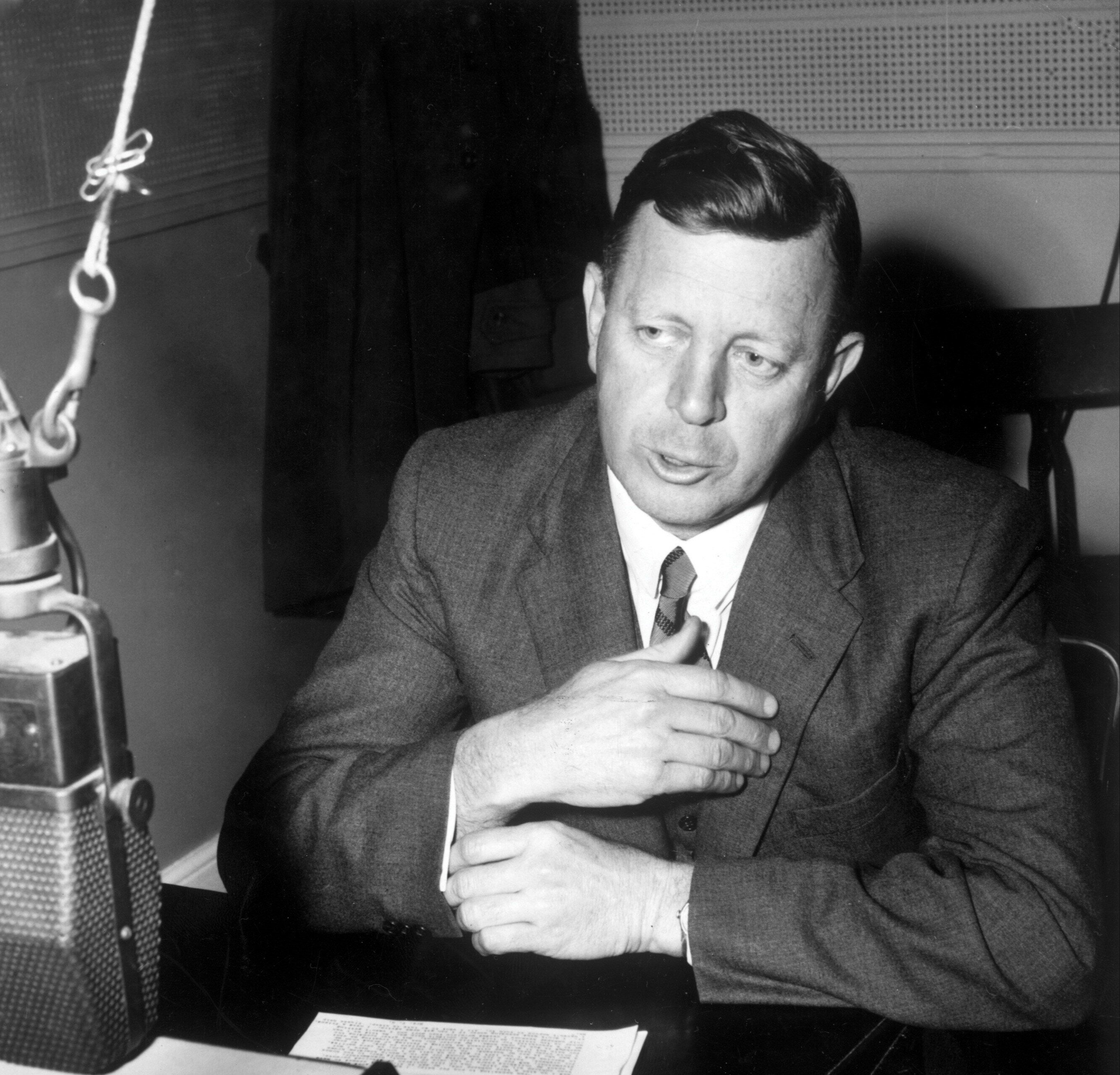
Earlier Superintendents did not exercise the prophetic ministry with as much controversy or strength as did Rev Dr Sir Alan Walker who very quickly gained a reputation for his controversial and hard-hitting stands.

Sometimes the Mission lost support because of his prophetic utterances, and other times greatly gained. Under his leadership the Pleasant Sunday Afternoon, which provided musical and biblical content for people over many decades in the heart of the city became The Lyceum Platform where, for a number of years, social issues were debated and examined by speakers from the Christian point of view. The message of this crusading platform was carried by radio to the people of Sydney.

In recent years radio and television have become overpopulated with current affairs programs and people making utterances on the social issues of our day, and the voice of the church is only one of many competing voices.

The Mission decided to continue its social issues presentation with a changed format, instead of finding fifty social issues each year to fight from the Lyceum Platform, the Mission chose to raise issues on television and radio where we have direct access to a large listening audience, and instead of criticising what the government had done, provided more materials for the government by way of submissions during the decision-making process rather than after it.

Submissions are made to Federal and State governments on a wide range of social and moral issues, and in one Senate Select Report a large amount of the Mission's submission was accepted ultimately as the Federal Government's report.

Dr Keith Suter has recently rejoined the Mission and has quickly used his remarkable intellectual skills (he has two Ph. D's!) and deep Christian commitment to formulate new submissions on government policy.

However, public protests are still held when matters of importance are raised, and the new Wesley Theatre is still open to the church at large to be used for significant Christian protest.

One important aspect of the prophetic ministry is at the individual level. The church must speak on behalf of those whom society ignores or tramples. The poor, the confused, the hopeless, the homeless, the unemployed, the socially neglected, the physically ill are part of the constituency that is represented by Wesley Mission. These people have little voice in the community and against the bureaucracies, and although their need is real it is seldom heard. Someone needs to stand alongside them, and with all of its strength speak on behalf of the powerless.

Wesley Mission sees itself as the voice of the voiceless. Understanding, compassion, backed by specialist social research, provide the basis for Christian social action on behalf of those people in the community who have no muscle of their own.

To represent the powerless in the community requires a city church ministry with muscle.

A powerless church is only another ineffective voice.

The weight and size and strategic strength of Wesley Mission have been effective in helping people in their battle against State and Federal government bureaucracies, and on behalf of ordinary people caught up in legislative changes and political decisions, the Mission speaks to enable justice to be done.

Only a church with a city on its heart can do that!

The powerlessness of ordinary people caught up in the machinery of government, and the apathy of so many public servants, make more urgent the role of the Mission.

Personal political lobbying at the highest level by senior staff, close personal contact with politicians and public service bureaucrats mean that ordinary people's needs can be helped, frequently by a simple telephone call to the right person.

Back to top

Quality management

One of the secrets of the Mission's continued growth and strength has been the attraction to the Mission of men and women of the highest calibre to provide ongoing professional management in all of its areas of work.

Head Office is where lies our Financial Development Division, charged with the responsibility of raising increasing amounts of money from the general public to help us in our ministries. So successful has the Financial Development Division been that our income from the general public has more than doubled, and doubled again, in the last few years.

Special features during the year are held to thank our supporters, and a Major Donors' Dinner, held each May, brings together the major sponsors of areas of our activities.

At the dinner we use a video presentation to show our supporters how their money has been used throughout the year just past.

Legacies and wills continue to play an important part of our work, and almost every new development in the history of the Mission has been commenced because of the thoughtful provision of a person leaving a bequest to the Mission which has been set aside for some new development.

It is the policy of the Mission that all such legacies are reserved for new developments. Major bequests can also result in buildings or sections of buildings being named after the donor. The Mission with its tremendous plans for future development urgently needs more people to consider the stewardship of their estate and return a portion of it to the ongoing work of benefiting others. Full information is readily made available to anyone requesting help in estate planning.

The Wesley Development Fund was established as a non profit instrument to help individuals continue to support the Mission through a one-time investment of their savings.

The sole task of the Wesley Development Fund is to administer funds and use the income from them to support existing services and to help develop new and creative programs.

By placing savings in the fund at no interest, or at interest rates equal to current savings bank rates on ordinary deposit, individuals can provide an continuing source of income for the Mission.

Approximately one million dollars is currently lodged by members and supporters of the Mission, and the interest from this money is a very significant factor in enabling our development of caring services.

Recently we have launched a new fund-raising program called `The Guardians'. Carefully selected members of the community are invited to contribute to the caring work of the Mission thereby becoming `guardians' of the Mission's future. In return they receive a special letter of thanks and a certificate of membership.

One of the greatest bequests ever received in the history of the Mission lay in Cottee Orchard conducted under the oversight of Harold W. Cottee Pty. Limited. Cottee Orchard today grows 1% of Australia's total citrus crop, and all profits from the orchard are made available to the Mission's child care program.

Under the leadership of Mr. Harold S. Cottee and a board of competent directors, this company has grown from strength to strength and continues to make increasingly significant donations into the life and work of the Mission. This orchard, part of a good Christian man's estate, is a prime example of how a thoughtful bequest can generate significant support year after year in serving others.

The management of all of our Mission's activities, including the oversight of 1,250 fill-time staff and a budget turnover in excess of $45 million, requires the most competent of management. To this end the Mission has in recent years paid realistic salaries and encouraged all of its senior managers to attend management training programs conducted by the Administrative Staff College in Mount Eliza, Victoria.

These residential training programs, which run from two to four weeks, have given our senior management high levels of personal training and management skills. We are grateful to the Administrative Staff College which makes available places for senior staff training, saving the Mission at least $10,000 per annum in management training fees.

Back to top

Spiritual Gifts

Christians need to discover their spiritual gifts and then learn how and where they are to use them. God grants to each of us capacities and gifts, and each Christian has the responsibility to discover his or her gifts and allow them to be used for the benefit of others. Churches grow when each individual gift is recognised, encouraged and developed, and then applied in the work of Jesus Christ.

At Wesley Mission members of the church are encouraged to exercise their spiritual gifts. Many are trained in forms of leadership. Over the years the Mission has been engaged in leadership training, particularly in the early part of its life through the Evangelists' Institute which came to an end with the increasing development of centres for ministerial education. However, today there is still much emphasis placed upon the training of elders for leadership in the local congregation, the training of lay preachers, staff orientation programs and the training of volunteers.

Back to top

Giving

The strategy of the early church was to disciple the nations by winning people in the centre of the cities. Paul had a very impressive strategy which took him to the most famous cities of the ancient world - Corinth, Antioch, Philippi, Thessalonica, Jerusalem, and mighty Rome. It was his calculated strategy to win the empire by winning the great cities in it.

Paul saw the cities as the decision making centres, and their life the civilising force of the rest of the empire.

His strategy was to win the empire by winning the cities. Over the centuries the church built great cathedrals dominating city squares, and church bells peeled across the city streets. In another era, the preaching from the pulpit of city churches had tremendous influence over the attitudes of people in the cities.

Today the church does not have any protected place in the life of the city.

But it still has its charge to win men and women to Jesus Christ, and in a country like Australia where 86% of our people live in seven cities, to be effective in our evangelism of this country requires us to be effective in our evangelism of her cities, particularly Sydney. Between Newcastle and Wollongong live one out of every three persons in Australia.

The Lord Jesus Christ has given us the church to proclaim His gospel to people in this community.

Wesley Mission has been faithful to its ministry of evangelism.

There have been some Christian missions, both in Australia and overseas, that have changed from evangelism to welfare, and then from the provision of welfare to the seeking of justice. We are not critical of their evolution of concepts, but we believe that evangelism is still primary in our tasks, and that all other emphases are in association with it.

Consequently, Wesley Mission has lived by evangelism. We believe the church is only the church when it is the church in mission.

Every Sunday night in the new Wesley Theatre, the message is a gospel proclamation encouraging people to consider the claim of Jesus on their lives. In the beautiful phrase of John Wesley, we `offer Christ'. It is always a matter of rejoicing when we see people stepping forward as an outward sign of their inward commitment to Jesus Christ.

Since 1884 open air preaching has been a feature in the life of Wesley Mission, and over the years in varying degrees an open air witness has been maintained.

Several of our elders and key lay people have been trained in the art of sharing their faith with people in their own home, and regular home visitation is conducted under the oversight of the Pastoral Department where the faith is shared with others.

In W.G. Taylor's day the most effective way to reach people with the gospel of Jesus was to proclaim it loudly on the city streets. Today the most effective way is to proclaim it softly through television.

The Mission has accepted this task of evangelism through the media with serious resolve. As is detailed below, the Mission has the largest media ministry of any church in Australia, and the significant fact is that although the media is used to inspire and educate, to propagate Christian truth and to encourage believers, in all of the major television programs, both `specials' throughout the year and in the regular half-hour weekly program seen nationally, there is opportunity for people to make commitments to Jesus Christ and to respond by ringing tele-counsellors who are at a central telephone point. These tele-counsellors have been trained to use the Scriptures and to counsel people according to their needs, helping them to come to make commitments to Jesus Christ. They then have literature sent to them, and local churches are contacted so that they might be followed up and encouraged to come into membership with a local congregation. This is the only program of its kind in Australia, and the only program like it on a weekly basis anywhere in the world.

Approximately 1,000 people per year are counselled in making a commitment to Jesus Christ through television and radio programs.

This aspect of evangelism is unique to Wesley Mission, Sydney, and has proved in the years it has been operating to be a valued contribution to the church's outreach ministry.

Back to top

Using the media for the Gospel

The Apostle Paul was quick to utilise the highways of the ancient Roman world to take the gospel into all the known parts of the empire. In the 20th Century those highways are magazines and newspapers, and the airways of radio and television.

Each of the last three Superintendents has pioneered forms of the media which have brought them into prominence in the community. Dr. Frank Rayward was one of the first ministers of religion in Australia to develop the art of broadcasting on radio, and during the 1940s and 1950s he used that to great effect.

During the 1960s Rev Alan Walker pioneered the church's ministry on television, and his successful `I Challenge the Minister' ran for some seven years, with the largest audience then to date.

Rev Dr Gordon Moyes developed a national weekly television ministry such as neither the Mission nor any other church in Australia had ever had before. Under his leadership, Wesley Film Productions was set up to produce television documentaries on the New Testament.

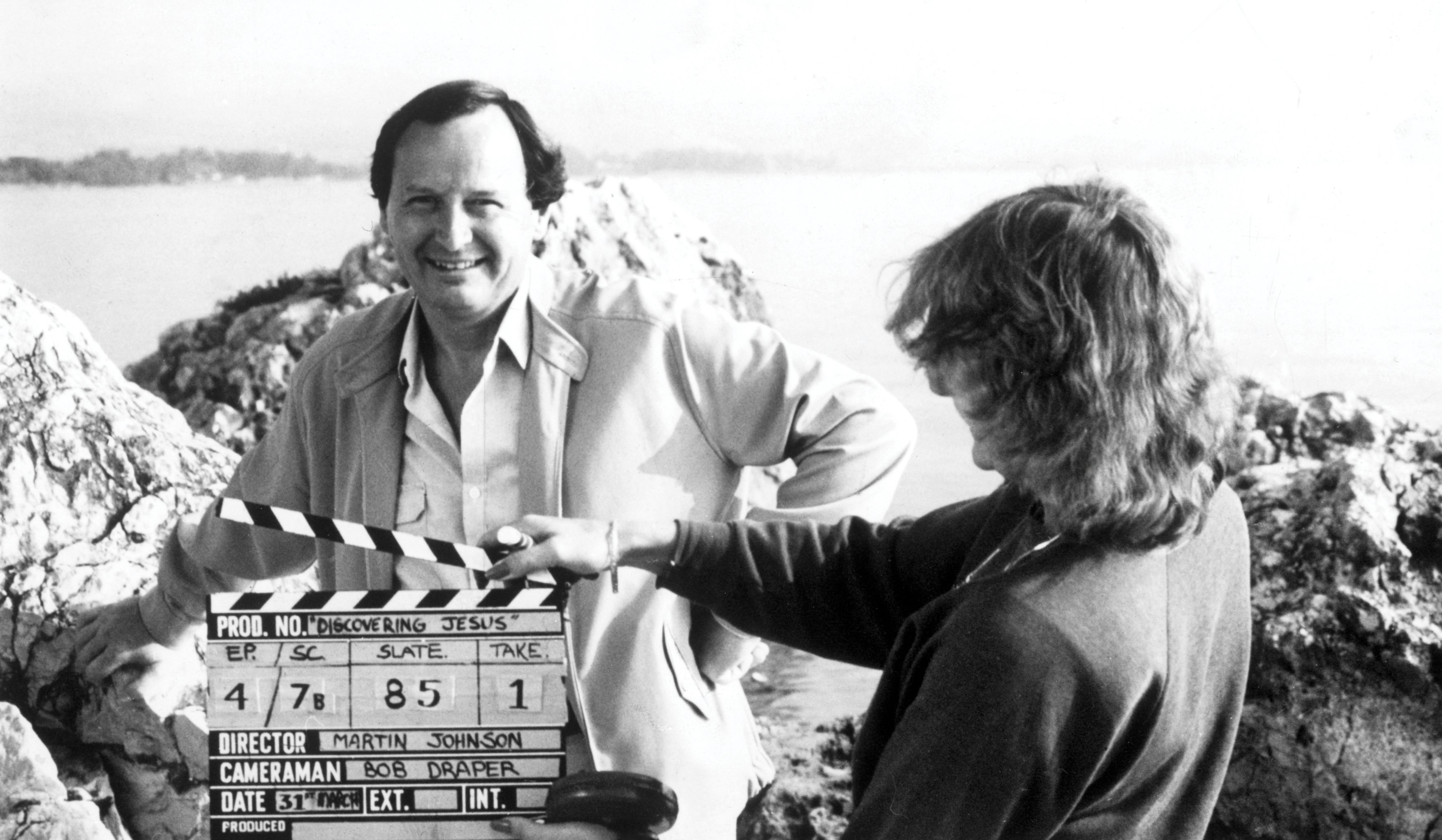
Discovering Jesus, Discovering Paul and Discovering the Young Church together with the historical Discovering Israel have pioneered the way for Christian television and video productions. The series' have been screened nationally and have been sold to many overseas countries and translated into Italian, Spanish and Korean.

Wesley Mission is the only church in Australia with a full-time Communications Division with its own public relations and media department. Every week we present Turn 'Round Australia, a half-hour Christian magazine program that is aired nationally on the Nine Network and associated stations across the country.

At Easter and Christmas special programs are also taken by a much wider network of television stations.

Every Sunday night, the Mission presents Sunday Night Live, on Sydney station 2GB 873. This program presents the best in Christian comment and interviews and over its six years on-air is the most listened to talk program in Sydney on a Sunday night.

Five times a year we produce `Impact', our 24 page magazine. `Impact' covers news of Mission activities and features personal stories of conversion. Each issue also challenges the reader to consider the claims of Jesus.

Press releases are issued regularly on major issues. We believe it is important that the Mission speak out on issues of social concern as well as uphold the standard of the gospel of Jesus Christ.

Wesley Graphics the Mission's own art department, provides the necessary high class artwork, photographic work and typesetting requirements for the Mission.

A cassette ministry provides multiple cassette duplication of every Wesley Theatre service, and the immediacy of this service is seen as people leaving the service each Sunday night are able to buy cassette recordings of the very service in which they have just participated.

In all of this work, as was mentioned under the evangelistic ministry of the Mission, a unique feature is that it ties the telephone to television and radio. Immediate response may be made by people back to Wesley Centre from anywhere in Australia, where calls are received by trained tele-counsellors who can give immediate personal support and counselling on matters of a spiritual nature. Printed literature is made available for all who write and request it.

Although the Communications Division is only one of many activities within the life of Wesley Mission, it is the foremost producer of Christian programs in Australia with an output that exceeds all other Christian program producers.

One highlight of the church's evangelistic ministry each year is Easter Mission. During nine days of Holy Week, the whole city is presented with an evangelistic program which is conducted in the city streets, in Hyde Park, through special functions, a breakfast for businessmen and community leaders, a luncheon for Christian women, special services conducted before work, during the day and at evening, special musical, drama, film and concert presentations, specially prepared spots on radio and television programs seen across the nations, a live hour long telecast from the Sydney Opera House, and the use of all of the facilities of Wesley Centre, including Wesley Theatre and Wesley Chapel.

The aim of this special week is to present as many people as possible with the true story of the meaning of Easter. This year, we reached 60,000 people with the message of Easter. In 1991, our Easter Sunrise Service, telecast on the Seven Network, was seen in all capital cities of Australia and the larger regional centres.

There is another aspect of special evangelistic outreach, conducted by members of the pastoral staff in other churches. As several members of the pastoral staff have evangelistic gifts, there is a call upon them by other churches to use their gifts in missions and crusades. About eight crusades a year are conducted in other churches with prayer, encouragement, and in some cases through gifted members using their skills in music, counselling or personal testimony. Students from Creative Ministries International are able to use their musical gifts in supporting these ministries.

The cutting edge of evangelism must be present in any effective city ministry, and Wesley Mission has demonstrated over the past century that it is not enough for a church to just worship or serve, but that there must be the gospel of hope presented to those in the city streets.

Consequently, the evangelistic program of Wesley Mission is that its services of outreach are designed primarily for the person who is not a Christian, and special effort is made to reach these people with the good news of the gospel. These services are so arranged that those people who are not Christians can understand what is happening and feel at home during them.

Conversions are recorded. Lives are changed. The Mission has been true to the command of the Master to disciple people in His name.

Back to top

Ministry

Loneliness and a sense of alienation are the most deadly diseases within contemporary society. In every large congregation there are those people who feel alienated from others, alone and rejected by society at large.

In spite of, and indeed because of, the vastness of the city, there are large numbers of people who have no close relationship with any other person.

The city church has a special responsibility to encourage fellowship among Christians who work or live within the inner city, and between those Christians who are not yet within the family of faith.

Wesley Mission seeks to encourage that fellowship on four levels:

The first is the personal level where the individual is encouraged to have a close relationship with God. To this end they are provided with devotional materials, Bible study aids, prayer guides, and materials for the development of Christian life.

On the second level, every person within the city church is encouraged to belong to some small group. Many of these groups are home groups, Bible study groups, social, sporting or cultural groups, and others are interest groups. It is our aim that everyone finds the caring friendship of other people within a group with whom they can relate.

The third level is that of a congregation, where people can identify with a larger number of people with similar ideals and attitudes. These congregations may meet during the week, and in midweek congregations there are many Christians who find fellowship with other Christians who, for various reasons, are unable to worship in a local church on a Sunday.

Some come from marriages where the other partner is not a Christian and makes it difficult for regular worship patterns to be observed. Some of the congregations have a unique feeling of `homogeneity' about them. The obvious example is at Edward Eagar Lodge where about 100 people attend service each Sunday morning, where 90% of the congregation are homeless, and where a large percentage is also alcoholic or drug addicted. This congregation has its own regular choir and church leaders.

On the fourth level, all Christians are invited to identify with larger meetings of Christian people in mass gatherings or celebrations, and to this end the Wesley Church-in-a-Theatre provides an opportunity for people from different ethnic congregations or other congregations to meet together and be identified as part of the church.

We believe that fellowship opportunities within the church must be available seven days a week, and church properties should be used constantly around the clock. Including the various telephone counselling ministries, Wesley Centre is in use 24 hours a day every day of the year.

Wesley Centre itself becomes a fellowship centre within the heart of the central business district. This building provides many facilities for people who live or work near the city centre.

It is an alternative to those clubs which centre on gambling, alcohol and a permissive atmosphere.

The Wesley Centre Restaurant provides a service to those people in the community who want to have meals in a congenial atmosphere, and each year about 50,000 meals are served.

In the heart of Wesley Centre, adjacent to the Cafeteria and the lounge area, is the rebuilt John Lees Chapel. At this central point people come for prayer and meditation, and a continuing ministry of praying for the sick and the needy is exercised.

Many people who have no church, or who seek a fresh relationship with Jesus Christ, come to Wesley Centre. There they can find a caring fellowship offered by people who act as group leaders, hosts or hostesses, and who encourage them to participate in some of the church's activities.

There is a healthy program for single people. There is also a Couples Club, Christian Climbers and a large number of discussion groups, fellowship teas, high tea, Elders' tea, family camps, youth camps, and each week a number of meal opportunities for people of different social or ethnic backgrounds.

Small groups of people with common interests provide one of the secrets of church growth. A dynamic church needs small groups as a loaf of bread needs yeast. In small groups people find acceptance, power to change themselves, and the feeling of belonging to the church and the community.

That sense of acceptance is very important for those people who attend groups primarily because their common factor is that they are alcoholic, or compulsive gamblers, or that they are not yet married, or they have been divorced, separated or widowed, or have some other common factor. Opportunities for dancing, art, drama, music, discussion, table tennis, tennis, social activities and outings, all within the friendly atmosphere of Wesley Centre, help people find a place where they can relax and meet with others of a like Christian mind.

For many people the loneliness of urban living is hell.

The city church must provide the alternative in fellowship.

One important expression of this is in the number of outings, social groups, bus tours, boat excursions, picnics, and weekend camps and conferences that are held by the Mission. These special activities away from the city provide a unique opportunity for people to really come to know each other. Many of the activities associated with raising funds for the annual Spring Fair are, in essence, fellowship opportunities.

The greatest punishment on earth is solitary confinement. Many people, innocent of any crime, live within the city with a sense of loneliness and alienation. The church has been given the privilege of providing fellowship to those people, and in developing a shared significant fellowship, many people find the most significant aspect of the church's life.

Differences in financial status, education, social prestige, race and nationality, often all too apparent in human society and divisive between people, disappear when the city church provides a true relationship with each other in Christian fellowship.

There are over 70 weekly groups, averaging a total of 2,500 people per week who meet in Wesley Centre. Some of these groups have large memberships and others are small. The School for Seniors has in excess of 1,100 members and this large number breaks down into about 100 different classes. Those classes provide different cultural, educational, social or sporting opportunities.

Back to top

148 workers with disabilities provided with job support »

Directory

Wesley Centres »

About Wesley Mission and the Uniting Church

Serving our Community »

Support Wesley Mission

Make a donation »

Read the latest issue of our Frontlines magazine